

Presented with a Live Score by Flautist + Modular artist Miya
Voted one of the ten best films ever made in the Sight & Sound 2012 poll, and the best documentary ever in a subsequent poll in 2014, Man With A Movie Camera (Chelovek s kinoapparatom) stands as one of cinema’s most essential documents – a dazzling exploration of the possibilities of image-making as related to the everyday world around us.
The culmination of a decade of experiments to render “the chaos of visual phenomena filling the universe”, Dziga Vertov’s masterwork uses a staggering array of cinematic devices to capture the city at work and at play, as well as the machines that power it.
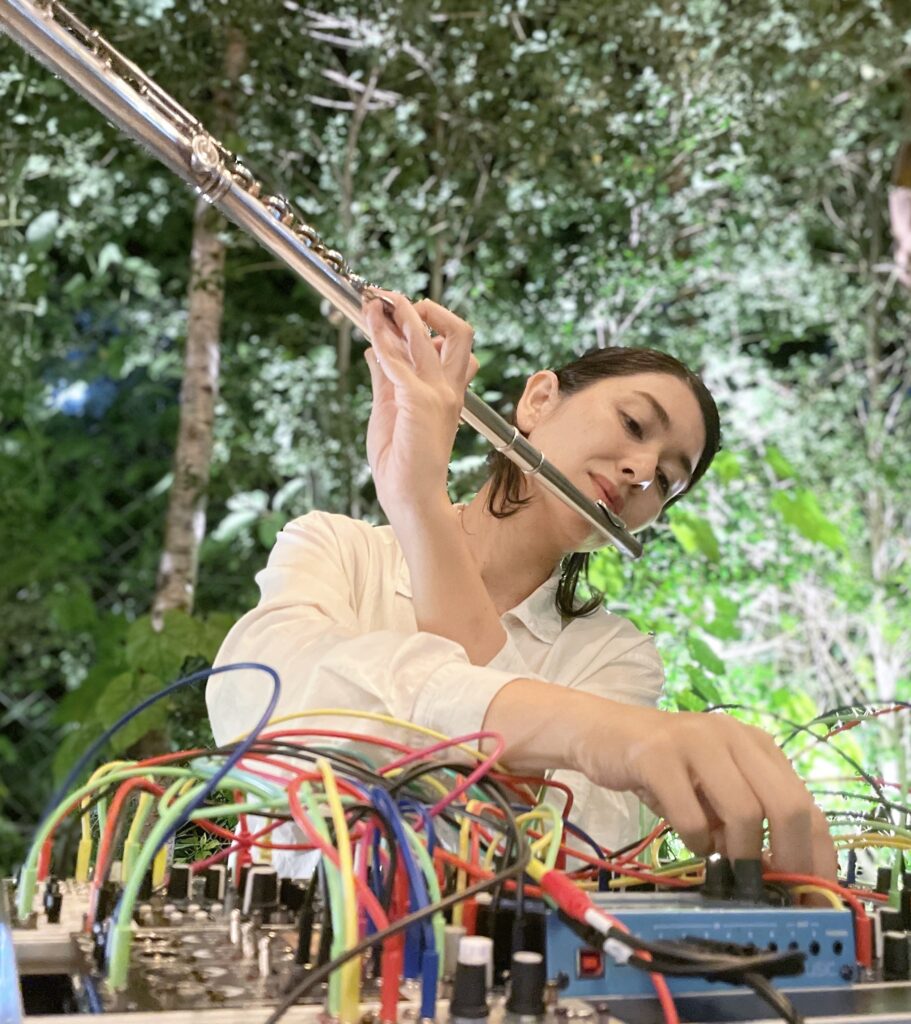
ABOUT MIYA:
Miya is an augmented flute player who fuses acoustic instruments (flute, nōkan, ryūteki) with electronic music, creating an innovative musical world that bridges classical and contemporary traditions. With her “modular flute”, she controls modular synthesisers through her breath, using the unique qualities of both Eastern and Western flutes to produce sacred sonic spaces where audience and environment interact.
Her work has been highly acclaimed on stages both in Japan and abroad, with performances in live houses and art venues in London, Berlin, India, and Malaysia. In Japan, she has performed not only in live houses but also at major art events, including the Setouchi Triennale, BankART, and DOMMUNE. She has also contributed to commercial music and public events, emphasising interaction with space and audience in her multifaceted performances.
She is also an active recording artist, with releases including the jazz album Miya’s Book (2007), produced by Yosuke Yamashita, the live improvised conduction album Benedict/Miya+7 Maestros (2018), and the modular flute–focused album Namkang (2025).
Since 2019, Miya has fully integrated electronic approaches into her practice, establishing a performance style in which her breath controls modular synthesisers. In 2024, inspired by her collaboration with the Switzerland-based extended flute performer MELO, she co-founded the Improvisers Machine Orchestra with Kōta Arai, incorporating interactive electronic elements into orchestral improvisation with conduction, and exploring sustainable methods of musical and artistic expression.
Going forward, Miya continues to explore the liminal spaces at the boundaries of things and worlds, creating sacred sonic environments through the breath of life and the augmentation of informational embodiment. Utilising both Eastern and Western flutes and electronic augmentation, she aims to keep transcending the boundaries of classical and contemporary, East and West, and to craft new musical realms.
-
Saturday 18th JulyBook 12:00 pmLIVE SCORE

This performance will feature a live score performed by Hugo Max.
"I first saw Murnau’s Symphony of Horror when I was nine years old. The film’s expressionistic images continue to haunt me, the chiaroscuro compositions tapping vividly into timeless subconscious fears.
My improvisations on viola and piano draw inspiration from the leitmotifs and sound effects of 70s horror soundtracks and the languages of Second Viennese School composers contemporary to Murnau, also Jewish Traditional Music that informs my personal approach to creating a score for the film." - Hugo Max
Please view this YouTube video for a sample of Hugo's work.
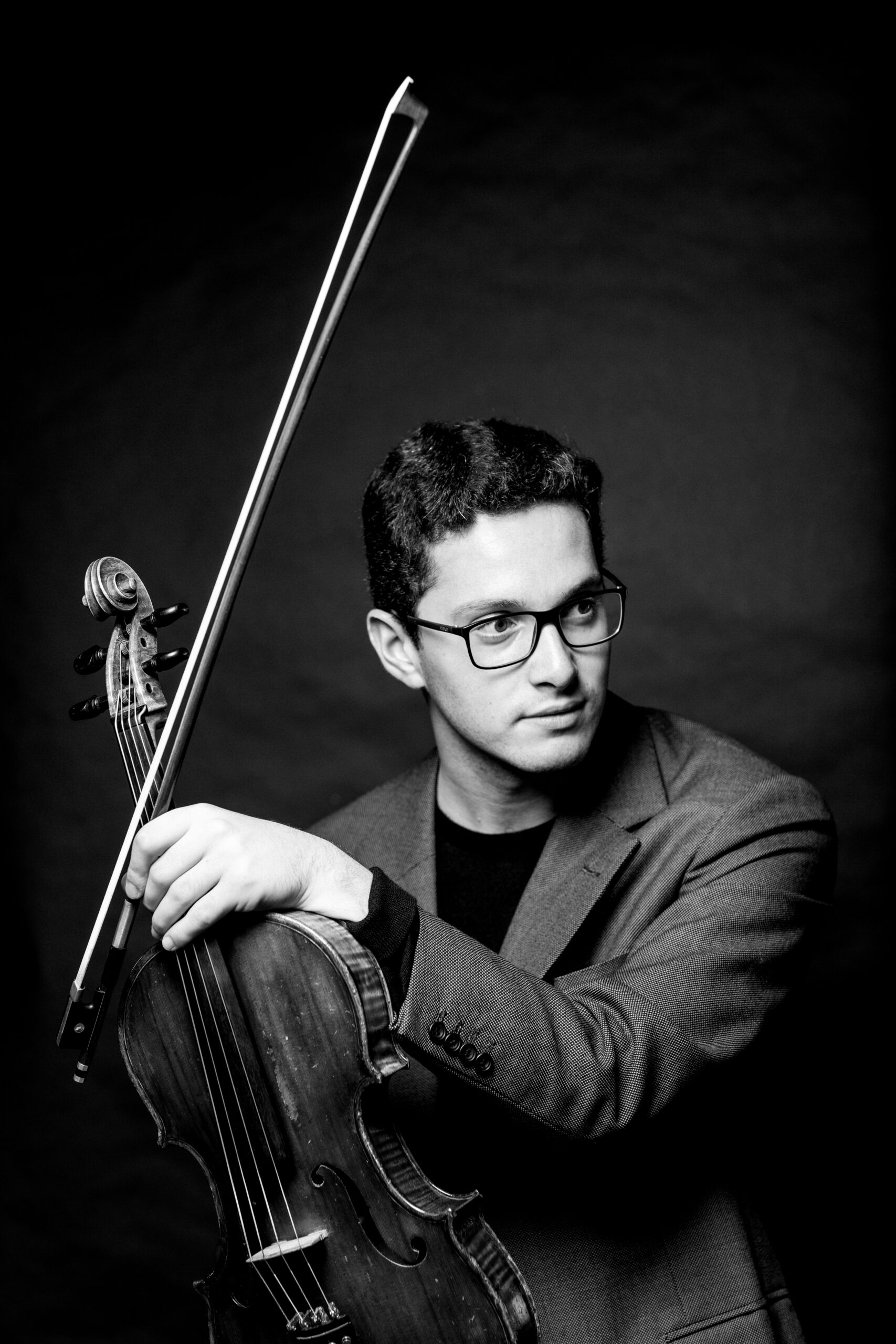
Photo Credit - Richard Ecclestone
An iconic film of the German expressionist cinema, and one of the most famous of all silent movies, F. W. Murnau's Nosferatu: A Symphony of Horror continues to haunt — and, indeed, terrify — modern audiences with the unshakable power of its images. By teasing a host of occult atmospherics out of dilapidated set-pieces and innocuous real-world locations alike, Murnau captured on celluloid the deeply-rooted elements of a waking nightmare, and launched the signature "Murnau-style" that would change cinema history forever.
In this first-ever screen adaptation of Bram Stoker's Dracula, a simple real-estate transaction leads an intrepid businessman deep into the superstitious heart of Transylvania. There he encounters the otherworldly Count Orlok — portrayed by the legendary Max Schreck, in a performance the very backstory of which has spawned its own mythology — who soon after embarks upon a cross-continental voyage to take up residence in a distant new land... and establish his ambiguous dominion. As to whether the count's campaign against the plague-wracked populace erupts from satanic decree, erotic compulsion, or the simple impulse of survival — that remains, perhaps, the greatest mystery of all in this film that's like a blackout...
-
Friday 2nd OctoberBook 6:00 pmLIVE SCORE
-
Sunday 25th OctoberBook 5:45 pmLIVE SCORE
-
Thursday 29th OctoberBook 6:00 pmLIVE SCORE
-
Saturday 31st OctoberBook 5:45 pmLIVE SCORE

This performance will feature a live score performed by Hugo Max
The rich timbre of the viola perfectly captures the aura of Robert Wiene's The Cabinet of Dr. Caligari. My improvisations translate the film's angular painted shadows into unnerving melodies inspired by musical techniques that were evolving during the 1920s. The nefarious showmanship of Caligari invites theatrical and macabre sounds, in contrast with ghostly gestures evoking ‘the somnambulist' who is compelled to act against his will.
THE CABINET OF DR. CALIGARI : One of the most iconic masterpieces in cinema history, Robert Wiene's Das Cabinet des Dr Caligari shook filmgoers worldwide and changed the direction of the art form. Now presented in a definitive restoration, the film's chilling, radically expressionist vision is set to grip viewers again.
At a local carnival in a small German town, hypnotist Dr. Caligari presents the somnambulist Cesare, who can purportedly predict the future of curious fairgoers. But at night, the doctor wakes Cesare from his sleep to enact his evil bidding…
Incalculably influential, the film's nightmarishly jagged sets, sinister atmospheric and psychological emphasis left an immediate impact in its wake (horror, film noir, and gothic cinema would all be shaped directly by it).
-
Sunday 4th OctoberBook 5:45 pmLIVE SCORE
-
Friday 23rd OctoberBook 6:00 pmLIVE SCORE

This performance will feature a live score performed by Hugo Max
Benjamin Christensen’s Häxan must to be seen to be believed. Playing out as a lecture on witchcraft ‘made flesh’, the film foreshadows the found footage horror genre and features many of the most imaginatively realised and grotesque visuals of silent cinema history. My viola takes on the voice of the occult-obsessed lecturer(/director), possessed by the alluring darkness of the subject, wrestling with the film’s message of hierarchal corruption and its prevailing controversies.
Please view this YouTube video for a sample of Hugo's work.
-
Thursday 22nd OctoberBook 6:00 pmLIVE SCORE